How to Visit Shanghai 2026: Visa, Transport, and Money
A first-trip guide to Shanghai: current visa-free rules, best months, airport transfers, metro fares, payments, neighbourhoods, and a realistic plan.
Ce guide est actuellement disponible en anglais
Les traductions sont en cours. L’article ci-dessous est en anglais ; la version anglaise est l’originale.
Ouvrir la version anglaiseShanghai rewards a little planning. It is easy to get around, safer than most large cities, and surprisingly manageable for travellers who do not speak Chinese. The friction is concentrated in a handful of areas: entry rules, payments, connectivity, and airport transfers. Get those right and the rest of the trip is straightforward.
This guide is the planning overview. Each section points to a detailed guide if you want the full version.
Step 1: Check your entry route before you book
China’s visa rules changed significantly in 2024–2026, and a lot of older travel advice is now wrong. There are two routes that cover most short visits:
- 30-day visa-free entry: ordinary passport holders from 50 countries, including the UK, Canada, Australia, New Zealand, Japan, South Korea, and most EU countries, can visit China for tourism, business, family visits, or transit for up to 30 days. The United States is not on this list. Most of these arrangements are currently listed through 31 December 2026; check your nationality’s expiry before booking a trip near the deadline.
- 240-hour (10-day) visa-free transit: 57 nationalities, including US citizens, can transit through China without a visa if they arrive from one country and depart to a different third country, with a confirmed onward ticket. In Shanghai, eligible entry ports include Pudong Airport, Hongqiao Airport, and the passenger port.
Two cautions matter more than the headlines:
- The Shanghai transit area is Shanghai Municipality only under the current NIA port table. Do not assume that a Shanghai transit entry lets you add Suzhou, Hangzhou, or another province to the same trip. Confirm the permitted area with immigration or apply for a proper visa if your itinerary leaves Shanghai.
- Tourist visas still exist for nationalities and trip types that do not fit the visa-free routes, and for stays longer than the visa-free period. Apply through the official visa centre, not a random agent.
Do not book flights based on a social-media post. Check the current dates and nationality lists on the National Immigration Administration site or with a Chinese embassy, and ensure your passport is ordinary, valid for the stay, and has blank pages. The detailed visa guide covers the edge cases.
Step 2: Choose your dates
The best months for most visitors are late March to May and late September to November. Spring is mild and green; autumn is drier, clear, and more comfortable for walking. Late October to mid-November is the sweet spot.
Summer (June–August) is hot, humid, and prone to heavy rain and thunderstorms. Winter is cool and damp rather than freezing, but the wind off the river makes sightseeing less pleasant. Shanghai is a year-round city, but outdoor plans need a weather backup in summer and winter.
Avoid, if you can:
- National Day Golden Week (1–7 October): domestic travel is enormous and major sights are packed.
- Spring Festival / Chinese New Year: dates vary each year; transport is busy and some small businesses close.
- Labour Day holiday in early May: another domestic travel peak.
- Major trade fairs and events: hotel prices can spike; check the city calendar if your dates are flexible.
Step 3: Pick a neighbourhood, not just a hotel
Where you stay affects your trip more than the hotel brand. For a first visit, prioritise a location within a 5–10 minute walk of a metro station.
- People’s Square: the most central choice. Lines 1, 2, and 8 meet here; the Shanghai Museum and Nanjing Road are nearby. Good for first trips and short stays.
- Jing’an: central, lively, and well connected on Lines 2 and 7. A strong mix of restaurants, shopping, and easy metro access.
- Former French Concession (Xuhui and western Huangpu): tree-lined streets, independent cafés, boutiques, and a slower pace. Good for couples and repeat visitors; some areas are quieter at night.
- The Bund / Huangpu riverside: iconic views and walkable historic streets. Convenient for sightseeing, but pricier and more tourist-oriented.
- Lujiazui (Pudong): glass towers, river views, and business hotels. Less historic street life, but excellent for a skyline-focused stay or business trip.
- Hongqiao: practical for early flights or trains from Hongqiao, but too far west for a sightseeing base.
Most international hotels and licensed hotels can register foreign guests. Some inexpensive domestic hotels are not set up for foreign check-in, so confirm that the property accepts foreign passport holders before paying. Hotels normally handle the mandatory foreigner registration for you; if you stay in a private apartment or with friends, ask your host about police registration.
Book through a platform you trust and check recent reviews for air conditioning, soundproofing, and metro distance. Hotel prices vary widely by season and event; there is no single “normal” rate.
Step 4: Plan the airport transfer
Shanghai has two airports. Pudong (PVG) is the main international gateway, about 30 km east of downtown. Hongqiao (SHA) is about 13 km west and is better for domestic and regional flights; its T2 is next to Hongqiao Railway Station.
From Pudong, your main options are:
- Metro Line 2: about 7 yuan to People’s Square and roughly an hour. Cheap and direct, but crowded with luggage at peak times.
- Airport Link Line: about 40 minutes to Hongqiao; useful for airport-to-airport transfers and western Shanghai, not for downtown.
- Taxi: official ranks outside T1 Gate 12 and T2 Gate 25, 24 hours. The official estimate to People’s Square is around 180 yuan and 50 minutes.
- Maglev: fast to Longyang Road, where you transfer to the metro. It does not go downtown; one-way tickets are 50 yuan and the service runs from roughly 07:02 to 21:42 from Pudong.
- Late-night bus: a budget fallback after the metro stops, heading toward the Hongqiao hub.
Do not accept a ride from someone who approaches you inside the terminal. Use the marked taxi queue or a ride-hailing app’s designated pickup point. The airport guide has the full comparison, including Hongqiao and late-night options.
Step 5: Set up payments and connectivity before you fly
This is the part most first-time visitors underestimate.
Payments: Shanghai runs on QR codes. Install Alipay and/or WeChat Pay before departure, register with your home mobile number, and link an international Visa, Mastercard, American Express, JCB, Discover, or Diners Club card. Carry a few hundred yuan in cash as backup. The retired TourPass top-up scheme is not the current system; follow the in-app setup. Cards work in many hotels, malls, and larger restaurants, but not everywhere.
Connectivity: many international services do not work on mainland networks, including Google and several Western social apps. Choose international roaming or a travel eSIM before you fly, or buy a local SIM with your passport at an official carrier store or airport counter. Install offline maps and a translation app in advance. Google Maps is not reliable in China; Apple Maps, Amap, or Baidu Maps are better. If you rely on a VPN, set it up before departure and understand the local rules.
The money and internet guides cover fees, card limits, SIM registration, and app setup in detail.
Step 6: Build a realistic itinerary
Shanghai is big, and the temptation is to over-schedule. A good first trip has one major area per day and leaves room for meals and wandering.
A simple three-day shape:
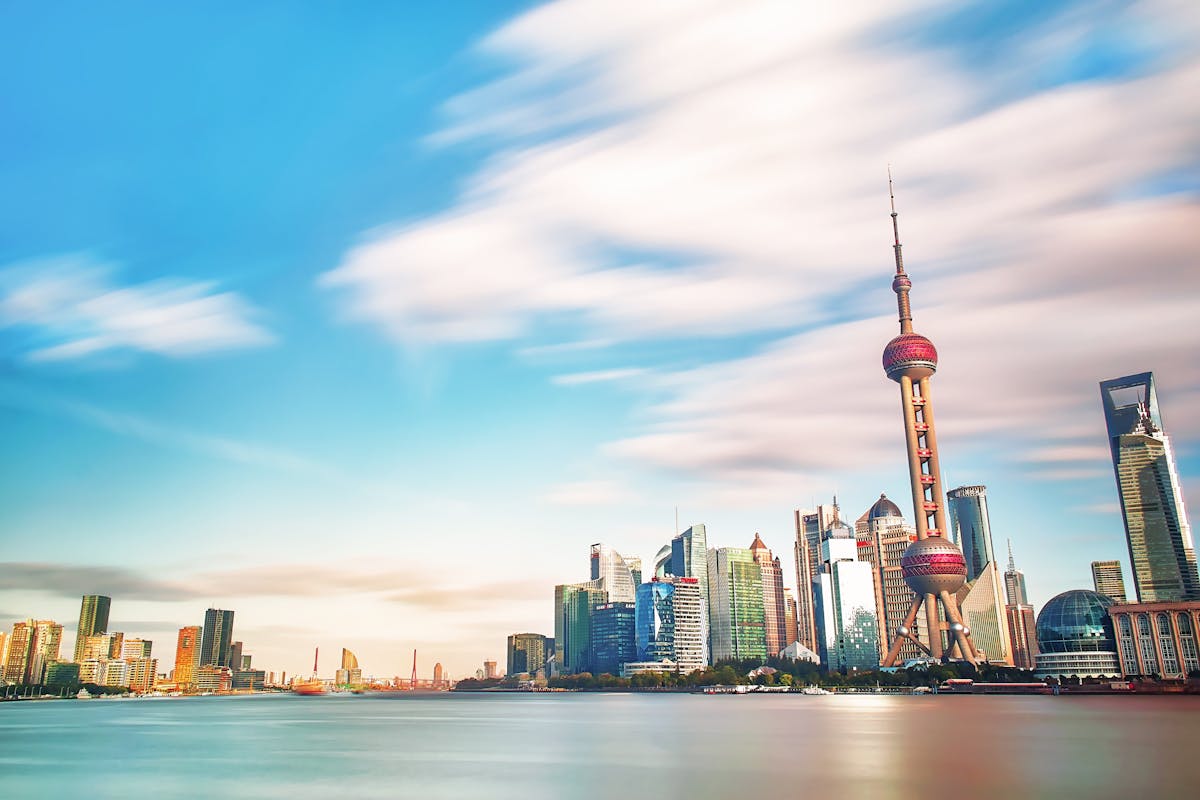
Day 1 — The river and the old town. Start at People’s Square or Nanjing Road East, walk the Bund in the late afternoon, and stay for the Pudong skyline at dusk. Visit Yu Garden and the old town earlier in the day if you have energy. This is an easy first day because the metro connections are simple.
Day 2 — The former French Concession and Jing’an. Walk around Anfu Road, Wukang Road, and the lanes between Huaihai Road and the riverside. Stop at a café, visit a small gallery or museum, and end at Jing’an Temple or the Jing’an shopping area. This is the most pleasant day for walking.
Day 3 — Choose one: Lujiazui and the Shanghai Museum East Branch, the West Bund art museums, or a day trip. Suzhou is about 30 minutes by high-speed train and Hangzhou under an hour, but do not leave Shanghai on a 240-hour transit entry unless you have confirmed that your permitted area allows it.
If you have more time, add a half-day for Zhujiajiao by Metro Line 17, a morning at the Shanghai Museum’s People’s Square branch (check which branch is open and whether it is a Monday or Tuesday closure), or a day in the West Bund. Do not try to cover Pudong, the Bund, the French Concession, and a day trip in 48 hours.
What it costs
Use these as planning components, not a daily budget promise:
- Metro: from 3 yuan for short trips; a one-day pass is 18 yuan, a three-day pass 45 yuan.
- Taxi: 14 yuan base for a regular taxi or 16 yuan for some electric taxis, covering the first 3 km, then about 2.7 yuan per km. Night and long-distance surcharges apply.
- Meals: a local bowl of noodles or dumplings is often 25–60 yuan; a mid-range dinner for two is commonly 150–400 yuan before drinks.
- Attractions: many are free; major sights can cost up to around 180 yuan. Check official channels for current tickets.
- Hotels: wide range, with the biggest price jumps around holidays and trade fairs.
Tipping is not expected. Bargaining is normal at markets and small antique shops, not in malls, chain stores, or restaurants. Check the bill for a service charge at upscale restaurants.
Language and etiquette
Mandarin is the official language; Shanghainese is also spoken, especially by older residents. English is common in hotels and tourist areas but not guaranteed elsewhere. A translation app, a screenshot of your hotel address in Chinese, and a few polite phrases go a long way:
- Nǐ hǎo — hello
- Xièxie — thank you
- Duōshao qián? — how much?
- Cèsuǒ zài nǎr? — where is the toilet?
- Bù hǎoyìsi — excuse me / sorry
Useful etiquette: let passengers off the metro before boarding, queue rather than crowd the doors, stand to the right on escalators, and do not stick chopsticks upright in rice. At temples, dress respectfully and follow signs about photography. Tipping is not customary.
Tap water is not normally drunk straight from the tap; hotels provide bottled water, and boiled water is the norm. Carry tissues for restrooms, especially outside malls and hotels.
Safety and common problems
Shanghai has a low rate of violent crime against visitors, but it is a huge city and the usual urban precautions apply. The bigger risks are traffic, petty theft in crowds, and tourist-area scams.
- Traffic: scooters and turning cars may not yield. Cross with the signal, look both ways, and do not step into a bike lane without checking.
- Taxi touts: use official ranks or a ride-hailing app. Ignore people offering “cheap” rides inside terminals.
- Unsolicited invitations: if a friendly stranger in a tourist area invites you to a tea ceremony, bar, or art show, be cautious and agree on prices before going anywhere.
- Valuables: keep your phone close on crowded metro cars and at the Bund during holidays.
- Passport: carry it or a secure copy; hotels and some services will ask for it.
- Emergency numbers: 110 police, 120 ambulance, 119 fire, and 12345 for city services with English support.
A quick pre-flight checklist
- Passport valid for your whole stay, with blank pages.
- Entry route confirmed for your nationality, including onward ticket if using 240-hour transit.
- Hotel booked and confirmed to accept foreign guests.
- Airport transfer plan and last-train time checked.
- Alipay or WeChat set up and a backup card or cash.
- Roaming, eSIM, or local SIM plan ready; offline maps and translation downloaded.
- Chinese address of your hotel saved offline.
- Travel insurance and prescriptions documented.
- A realistic itinerary with at least one unplanned block.
Shanghai is at its best when you stop treating it as a checklist. The skyline, the old lanes, the food, and the efficient metro are all easy to enjoy once the logistics are out of the way.
Sources and updates
Entry rules, transport fares, and payment details are checked against official Chinese and Shanghai government sources listed below. Policies and prices change; verify the current rules for your nationality and travel dates before booking.
Sources vérifiées
Les informations sensibles au temps s’appuient sur des sources officielles et primaires. Horaires, tarifs et règles d’entrée peuvent changer : vérifiez avant votre visite.
Muxin
Habitant de Shanghai et guide privé
Je réponds personnellement sous 24 heures
Ressources de réservation facultatives
Ces liens vers des plateformes de réservation sont facultatifs. Je ne perçois aucune commission.
Checklist de voyage Shanghai gratuite
Conseils pratiques, bonnes adresses et raccourcis locaux d’un habitant de Shanghai. Demandez-la et je vous l’envoie personnellement.
Pas de newsletter automatique ni de spam — juste un message direct pour moi.
Guides Connexes
Shanghai Visa Requirements 2026: Visa-Free Entry and Transit
Who can enter Shanghai without a visa in 2026, how the 240-hour transit rule works, and when US, UK, and other travellers still need a Chinese visa.
Lire le guideShanghai Airports: Pudong vs Hongqiao and City Transfers
A practical 2026 guide to Pudong (PVG) and Hongqiao (SHA): Airport Link, Metro Line 2, Maglev, taxis, night buses, and arrival mistakes.
Lire le guideShanghai Metro Guide: Fares, Tickets, and How to Ride (2026)
How to use the Shanghai metro: latest fares and passes, contactless bank cards, airport connections, key lines, and late-night limits.
Lire le guideVous voulez que ce soit planifié pour vous ?
Je crée des itinéraires sur mesure et guide des visites privées à Shanghai. Indiquez-moi vos dates et envies.
Je réponds personnellement sous 24 heures.