What to Eat in Shanghai: 12 Dishes and Where to Try Them
The Shanghai dishes worth seeking out, from soup dumplings to hairy crab, plus ordering, breakfast, and dietary tips.
Este guia está atualmente disponível em inglês
As traduções estão em curso. O artigo abaixo está em inglês; a página inglesa é a versão original.
Abrir a versão em inglêsShanghai cooking is often described as “sweet,” which is only half true. The city's food is a meeting point of Jiangnan river cooking, Ningbo preservation, Shanghainese home cooking, and decades of migration. It is also one of the easiest Chinese cuisines for visitors to enjoy: noodles, dumplings, braised meats, and pastries are everywhere, and English menus are common in central areas.
This is not a list of the 12 best restaurants. It is a list of 12 dishes and breakfast items worth trying, with enough context to order them and a few reliable places to start.
First, how eating works in Shanghai
Restaurants are generally informal. Order at the table, pay at the end or at the counter depending on the place, and do not tip. Mobile payment is standard, but cash is still legal tender and useful as a backup. Menus in tourist areas usually have English; local breakfast shops may not.
Portions are shared in family-style restaurants. At noodle and dumpling shops, each person usually orders their own bowl. Tea is often free, and tap water is not drinkable — buy bottled water or drink tea.
For a deeper look at street food and specific dishes, see my Shanghai street food guide.
The 12 dishes
1. Xiaolongbao (soup dumplings)
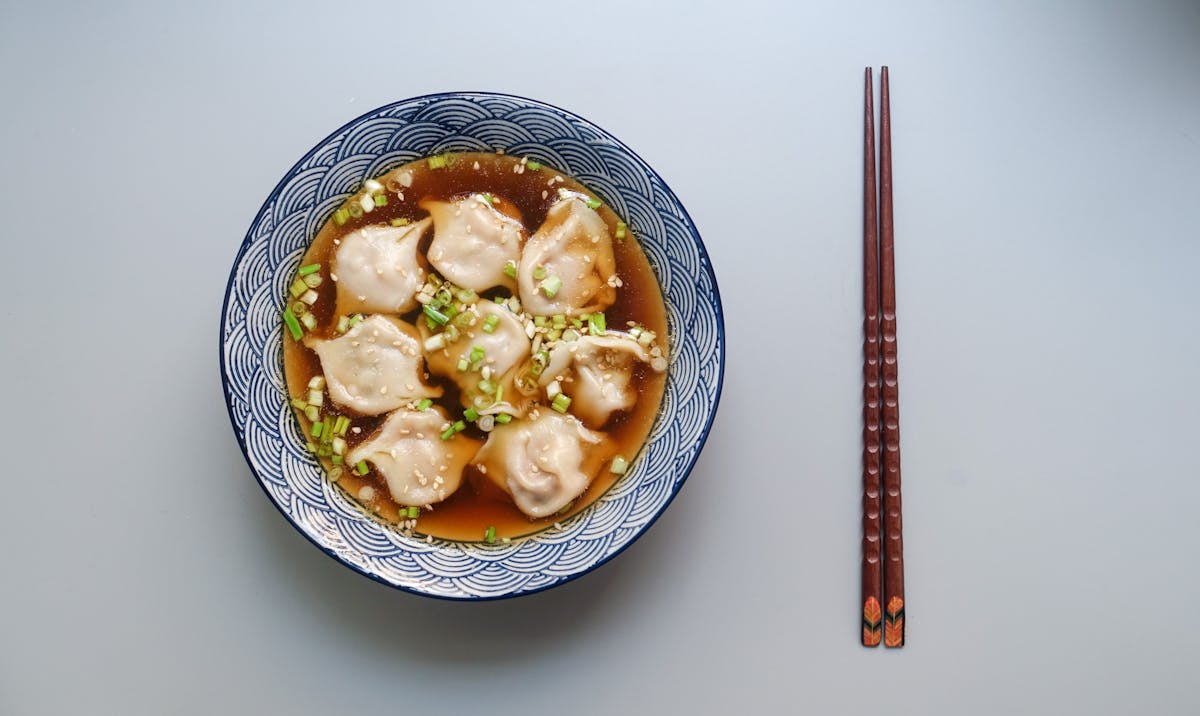
These are the city's signature dumpling: thin-skinned steamed buns filled with pork, sometimes crab, and a gelatin-rich broth that melts during steaming. The classic technique is associated with Nanxiang in Jiading and dates to the late 19th century, but every neighbourhood has its own version.
Eat them carefully. Lift by the topknot with chopsticks, put the dumpling on a spoon, make a small opening, sip the soup, then eat the rest with black vinegar and shredded ginger. Biting straight through will burn your mouth.
Where to start: Nanxiang Mantou Dian in Yuyuan is the famous historic option and is very touristy. For better value, look for busy local shops rather than the bazaar's front row. Jia Jia Tang Bao and Wu You Xian are well-known alternatives; check current locations and hours.
2. Shengjianbao (pan-fried pork buns)
Shengjian are the crispy-bottomed cousin of xiaolongbao: yeasted dough, pork filling, a little soup, and a hard-fried base. They are a breakfast and snack staple, best eaten hot from the pan.
Where to start: Dong Tai Xiang is a long-running Shanghai chain known for shengjian; Yang's Fried Dumplings is another accessible option. Both have multiple branches, so check the one nearest you.
3. Scallion oil noodles (cong you ban mian)
A deceptively simple bowl: noodles tossed in oil infused with slowly fried scallions and soy sauce. The best versions are savoury, slightly sweet, and not greasy. It is a good cheap lunch and a useful break from heavier braised dishes.
Order it at old-school noodle shops and neighbourhood restaurants. Add a braised egg or a piece of pork if you want more protein.
4. Pork chop with rice cake (pai gu nian gao)
Shanghai comfort food at its best: fried pork chops served with chewy rice cakes in a savoury-sweet sauce. The combination of crisp pork, soft rice cake, and soy-braised sauce is uniquely Shanghainese.
Where to start: Xian De Lai, a historic local restaurant, is known for this dish. It is a full meal rather than a snack.
5. Red-braised pork belly (hongshao rou)
Cubes of pork belly braised in soy, sugar, and rice wine until glossy and tender. It is rich, sweet-savoury, and usually shared. Good versions balance the fat with enough acid and salt; bad versions are cloying.
Look for it on Shanghainese home-style menus, not just banquet halls. Pair it with greens and rice.
6. Sweet-and-sour spareribs (tangcu paigu)
Fried or braised pork ribs in a sticky, sweet-and-sour glaze. It is served hot or at room temperature as a cold appetiser, and it is one of the dishes that explains Shanghai's reputation for sweetness.
It is a good sharing dish for a group. Vegetarians should note that many “sweet and sour” dishes in Shanghai contain meat by default; ask before ordering.
7. Drunken chicken (zui ji)
Poached chicken chilled in Shaoxing rice wine with ginger and scallion. It is served cold, often as an appetiser, and has a pronounced wine aroma. It is not a heavy dish, which makes it a good counterpoint to braised pork.
The alcohol content is low but not zero. If you avoid alcohol for medical or religious reasons, ask how it is prepared.
8. Eight-treasure duck (ba bao ya)
A banquet dish: a duck stuffed with glutinous rice, mushrooms, chestnuts, and other ingredients, then braised. It is rich, sweet-savoury, and usually ordered for a group. Some restaurants require advance notice.
This is not everyday food, and it is not the best choice for a quick lunch. Try it if you are having a proper Shanghainese dinner with several people.
9. Hairy crab (da zha xie)
Shanghai's autumn obsession. Hairy crab is steamed and eaten with ginger-vinegar dip; the roe is the prized part. The season is roughly autumn to early winter, and prices vary wildly by size and provenance.
Eat it at a restaurant that specializes in crab rather than ordering it as an afterthought. The meat is sweet and delicate, but the dish is fiddly and not cheap. If you are short on time, crab roe xiaolongbao or crab shell pastry are easier introductions.
10. Crab shell pastry (xie ke huang)
A flaky, round pastry filled with crab roe, pork, and sometimes shrimp. Despite the name, there is no shell in it — the pastry is brushed or shaped to resemble one. It is a good snack to try in the old city or at a bakery.
Quality varies enormously. Avoid pre-made pastries sitting in open trays; buy from a busy shop with turnover.
11. Ci fan tuan (sticky rice roll)
A Shanghai breakfast classic: sticky rice wrapped around a fried dough stick, pickles, pork floss, and sometimes egg. It is portable, filling, and savoury. Look for breakfast shops and street stalls in residential areas.
It is a good option if you want to eat like a commuter rather than sit down for a hotel breakfast.
12. Xian dou jiang (savoury soy milk)
Hot soy milk served savoury with vinegar, dried shrimp, pickles, and a splash of chilli oil. It sounds strange to visitors used to sweet soy milk, but it is a classic Shanghai breakfast pairing with you tiao (fried dough sticks).
Some shops serve it sweet as well. Ask for xian dou jiang if you want the savoury version.
Where to eat by neighbourhood
- Old city and Yuyuan: touristy but convenient for dumplings and snacks. Eat one thing, then move on.
- Huanghe Road and People's Square: restaurant clusters within walking distance of hotels, with a mix of local chains, old brands, and visitor-friendly menus.
- Jing'an and the French Concession: the broadest range of modern Chinese and international cooking, plus excellent cafés and bakeries.
- Hongkou and Yangpu: more everyday neighbourhood restaurants, less English, better value.
- Lujiazui: convenient for hotel dining and upscale Chinese restaurants, but not where locals go for a cheap bowl of noodles.
Street food and markets
Shanghai's street food scene is smaller than in many Asian cities because of years of street-cleaning campaigns. What remains is concentrated around breakfast shops, food streets, and older commercial lanes. Use common sense: high turnover, visible cooking, and a queue of locals are good signs.
If you have a sensitive stomach, avoid raw shellfish and unheated dishes from stalls, and stick to cooked food served hot. My street food guide goes into more detail.
Dietary needs
Vegetarian: Shanghai has Buddhist vegetarian restaurants and many modern vegetarian kitchens, but ordinary restaurants may use lard, oyster sauce, chicken stock, or dried shrimp. Say “wo bu chi rou” (I don't eat meat) and ask specifically about stock and lard. My vegetarian guide has useful phrases.
Halal: Lanzhou noodle shops and Hui or Uyghur restaurants are widespread and affordable. Not all “halal” signs are equivalent; ask about the kitchen's practices if this matters to you. See the halal guide.
Allergies: Peanuts, shellfish, gluten, soy, and dairy appear in unexpected places. Carry a translated card, show it to the server, and do not rely on “mild” English descriptions. For severe allergies, choose restaurants with a clear kitchen process and avoid busy street stalls.
The bottom line
Start with xiaolongbao, shengjian, scallion oil noodles, and pork chop rice cake. Add a braised dish to share, try a Shanghai breakfast, and eat hairy crab in season if your budget allows. The best meal is often in a plain neighbourhood shop, not a restaurant with a skyline view.
Use the official sources below for dish background and the Michelin selection, and check restaurant hours and locations before you travel.
Fontes verificadas
As informações sujeitas a alterações baseiam-se em fontes oficiais e primárias. Horários, preços e regras de entrada podem mudar — confirme antes de viajar.
Muxin
Local de Xangai e guia privado
Respondo pessoalmente em menos de 24 horas
Recursos de reserva opcionais
São ligações opcionais para plataformas de reserva. Não recebo comissão destas ligações.
Checklist de viagem de Xangai gratuita
Dicas práticas, escolhas de comida e atalhos locais de alguém que vive em Xangai. Peça e envio-lhe pessoalmente.
Sem newsletter automática e sem spam — apenas uma mensagem direta para mim.
Guias Relacionados
Shanghai Street Food 2026: What to Eat and Where to Find It
A practical street food guide to Shanghai: xiaolongbao, shengjianbao, scallion oil noodles, food streets, average prices, and hygiene tips.
Ler guiaShanghai Restaurants 2026: Michelin Stars and Local Snacks
A source-checked guide to eating well in Shanghai: the 2026 Michelin results, where to try xiaolongbao, average costs, and how to book.
Ler guiaShanghai Vegetarian Food: Complete Plant-Based Guide
Vegetarian and vegan guide to Shanghai. Best plant-based restaurants, Buddhist vegetarian cuisine, and tips.
Ler guiaQuer que eu planeie isto por si?
Crio itinerários personalizados e guio visitas privadas em Xangai. Diga-me datas e interesses.
Respondo pessoalmente em menos de 24 horas.