Xiaolongbao in Shanghai: How to Eat Soup Dumplings (2026)
Everything you need to know about Shanghai xiaolongbao: how soup dumplings are made, how to eat them without burning yourself, and the best shops to try.
Este guia está atualmente disponível em inglês
As traduções estão em curso. O artigo abaixo está em inglês; a página inglesa é a versão original.
Abrir a versão em inglêsXiaolongbao — often translated as soup dumplings — are the food most visitors associate with Shanghai, and for good reason. They are small, delicate, and filled with hot broth, and eating them well requires a little technique. They are also easy to eat badly: the first-timer who bites straight through a dumpling usually learns why Shanghai people lift them gently and sip the soup first.
This guide covers what xiaolongbao are, where they come from, how to eat them, and where to try them in Shanghai.
What makes a xiaolongbao
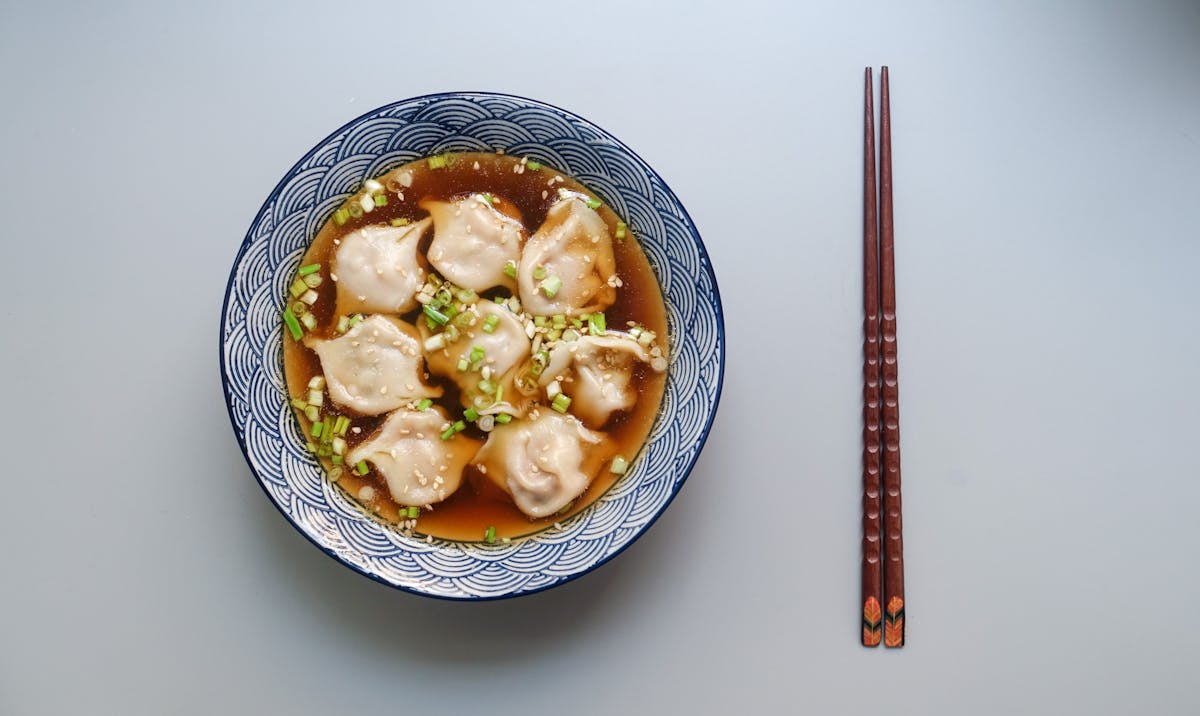
A xiaolongbao is a steamed dumpling with three components:
- A thin wheat wrapper, soft but strong enough to hold the soup.
- A pork filling, usually minced with a balance of lean meat and fat.
- Meat jelly, which melts during steaming and becomes the hot soup inside.
The jelly is the trick. Without it, you have a steamed pork dumpling; with it, you have the burst of broth that defines the dish. The wrapper is pleated at the top, and the best versions are thin enough to look almost translucent but strong enough not to tear when lifted.
They are served in bamboo steamers, usually with Chinese black vinegar and shredded ginger. The vinegar cuts the richness of the pork, and the ginger adds freshness. Some shops also serve a dipping sauce, but purists often taste the dumpling first before adding anything.
A short history
The xiaolongbao's story begins further north and much earlier than Shanghai's modern restaurant scene. During the Northern Song Dynasty (960–1127), a stuffed steamed bun called taixue mantou was popular among scholars in Bianjing, now Kaifeng.
When northern Chinese migrated south in the late Northern Song and early Southern Song periods, they brought wheat-based cooking techniques with them. Those techniques met the ingredients and flavours of Jiangnan, the region south of the lower Yangtze, and the dumpling evolved.
The modern form appeared in 1871, when Huang Mingxian, owner of a pastry shop called Ri Hua Xuan in Nanxiang, now part of Jiading District, refined the traditional meat bun. He made it smaller and thinner-skinned, added meat jelly to the filling, and set strict standards for the pork and the pleats. The result became known as Nanxiang xiaolongbao and eventually spread across Shanghai.
The making technique was added to China's national intangible cultural heritage list in 2014, according to the official Shanghai food guide. That is a useful reminder that this is not just street food; it is a craft with a history and a set of standards.
How to eat them without burning yourself
There is a well-known Shanghai rule for eating xiaolongbao: lift gently, move slowly, make a small opening, then sip the soup.
The phrase in Chinese is 轻轻提,慢慢移,先开窗,后喝汤 (qīng qīng tí, màn màn yí, xiān kāi chuāng, hòu hē tāng).
In practice:
- Use chopsticks to lift the dumpling by its pleated top and place it on a spoon. Do not grab the middle; it will tear.
- Hold the spoon over the steamer or bowl so you catch the soup if it leaks.
- Bite a small opening in the wrapper — the "window" — and let the steam escape.
- Sip the soup carefully. It is very hot.
- Eat the rest of the dumpling, dipping it in vinegar and adding ginger if you like.
Do not pierce the dumpling with a chopstick, stab it with a fork, or bite it in half over your clothes. Do not put a whole dumpling in your mouth straight from the steamer. The soup can scald.
If you are sharing, take one at a time and leave the rest in the steamer. Use the serving spoon if one is provided.
Where to try xiaolongbao in Shanghai
The official Shanghai guide highlights several shops, from historic brands to neighbourhood favourites. These details were published in March 2026; hours and prices change, so check before you go.
Nanxiang Steam Bun Restaurant (南翔馒头店)
- Address: No 87 Yuyuan Road, inside the Yuyuan Garden malls.
- Hours: 7:30–20:30.
- Average cost: about 93 yuan.
- Why go: founded in 1900, a China Time-honoured Brand, and the most famous name in the city. Classic pork and crab roe fillings. Convenient if you are visiting Yu Garden.
Lai Lai Xiao Long (莱莱小笼)
- Address: No 506 Tianjin Road.
- Hours: 8:00–14:00 and 15:00–20:00.
- Average cost: about 58 yuan.
- Why go: Michelin Bib Gourmand in 2024 and 2025. Known for crab roe xiaolongbao made with fresh crab. Many diners recommend tasting the dumplings before adding vinegar.
Wu You Xian (屋有鲜)
- Address: Room 103, No 7 South Maoming Road, near Huaihai Road.
- Hours: 9:00–20:00.
- Average cost: about 130 yuan.
- Why go: Michelin one-star in 2025, refined dumplings with 32 folds and a duck-egg-enriched wrapper. The signature tasting set includes crab roe, crab paste, and crab meat fillings.
Wan Shou Zhai (万寿斋)
- Address: No 123 Shanyin Road, Hongkou District.
- Hours: 4:30–21:00.
- Average cost: about 27 yuan.
- Why go: a neighbourhood eatery with about 70 years of history. Thin wrappers, generous filling, clear broth. Also known for three-delicacy wontons.
Jia Jia Tang Bao (佳佳汤包)
- Address: No 127 Huanghe Road.
- Hours: 7:30–20:30.
- Average cost: about 41 yuan.
- Why go: founded in 1986, a popular local chain with a well-known branch near People's Square. Good value and easy to combine with a walk.
For a first visit, Nanxiang is the convenient, historic choice, especially if you are already at Yu Garden. For better value and a more local feel, Jia Jia or Wan Shou Zhai are excellent alternatives. Lai Lai and Wu You Xian are worth the trip if crab dumplings are a priority.
Seasonal variations
Xiaolongbao are eaten year-round, but the fillings change with the seasons:
- Spring: malantou, a fragrant wild green, adds a fresh herbal note.
- Summer: lighter vegetable and lotus root fillings appear.
- Autumn: crab roe is at its peak, and crab xiaolongbao become the star.
- Winter: winter bamboo shoots add crunch and balance the richness of the pork.
If you visit in autumn, try a crab roe version. If you visit in spring, ask whether a malantou filling is available.
Ordering and practical tips
- Ask how many dumplings are in a basket. The number varies by shop, and the price is often per basket, not per dumpling.
- Order a side. A bowl of soup, some greens, or a plate of noodles rounds out the meal. Xiaolongbao alone may not be enough for a full lunch.
- Carry cash or set up mobile payment. Larger restaurants accept international cards, but small shops may not. See my money guide.
- Go early or off-peak. Popular shops have long queues at lunch and on weekends.
- Do not order takeaway for later. The dumplings lose their texture as they cool, and reheating them at home is not the same.
- Check dietary needs. Xiaolongbao usually contain pork and pork-based meat jelly, so they are not vegetarian. The soup and filling may also contain shellfish in crab versions. See my vegetarian guide and halal guide for alternatives.
What to eat with them
- Black vinegar and shredded ginger are the classic condiments.
- A bowl of clear soup or wonton soup makes a light accompaniment.
- Scallion oil noodles are a good option if you want a more filling meal.
- Shengjian, the pan-fried pork bun, is a different dish, but equally worth trying. Do not confuse the two.
My Shanghai breakfast guide covers the morning staples, and the street food guide covers other cheap eats.
Common mistakes
- Biting straight into a hot dumpling. You will burn your mouth.
- Lifting by the middle. The wrapper tears and the soup is lost.
- Eating at a tourist trap near a major sight. Compare prices and look for a queue of locals.
- Assuming all dumplings are pork. Ask about the filling, especially if you avoid shellfish or meat.
- Ordering too many. Start with one basket and add more if you are still hungry.
- Skipping the vinegar and ginger. They are part of the dish, not decoration.
The bottom line
Xiaolongbao are a small food with a long history and a specific technique. Go to a shop with a reputation, order a basket, use the spoon, and sip before you bite. Nanxiang is the historic name; Jia Jia and Wan Shou Zhai are the local value picks; Lai Lai and Wu You Xian are for crab lovers. Eat them in Shanghai, at a table, while they are hot.
Check the official sources below for current addresses, hours, and prices before you go.
Fontes verificadas
As informações sujeitas a alterações baseiam-se em fontes oficiais e primárias. Horários, preços e regras de entrada podem mudar — confirme antes de viajar.
Muxin
Local de Xangai e guia privado
Respondo pessoalmente em menos de 24 horas
Recursos de reserva opcionais
São ligações opcionais para plataformas de reserva. Não recebo comissão destas ligações.
Checklist de viagem de Xangai gratuita
Dicas práticas, escolhas de comida e atalhos locais de alguém que vive em Xangai. Peça e envio-lhe pessoalmente.
Sem newsletter automática e sem spam — apenas uma mensagem direta para mim.
Guias Relacionados
Shanghai Breakfast: The Four Heavenly Kings, Explained (2026)
What to eat for breakfast in Shanghai: dabing, youtiao, cifantuan, and doujiang, how to order them, where to find them, and the local etiquette.
Ler guia
Yu Garden (Yuyuan): Tickets, Timing, and What to See
A practical guide to Yu Garden in Shanghai’s old city: what the Ming-era garden is worth, how to avoid the worst crowds, nearby food, and ticket checks.
Ler guiaWhat to Eat in Shanghai: 12 Dishes and Where to Try Them
The Shanghai dishes worth seeking out, from soup dumplings to hairy crab, plus ordering, breakfast, and dietary tips.
Ler guiaQuer que eu planeie isto por si?
Crio itinerários personalizados e guio visitas privadas em Xangai. Diga-me datas e interesses.
Respondo pessoalmente em menos de 24 horas.